
Introduction to Performance Review Calibration
What is Calibration?
Calibration is a stage in the performance review cycle where managers review, discuss, and align employee ratings before they are finalized and shared. These sessions are typically facilitated by HR or People teams to ensure consistency across the organization.
The purpose of calibration is to reduce rating inconsistencies. Different managers may evaluate similar levels of performance differently due to varying expectations or rating standards. Without calibration, these differences can influence promotions, compensation, succession planning, and other talent decisions.
By aligning managers around a common standard, calibration creates a more objective, equitable, and trustworthy performance review process.
Why a Performance Management System Matters
In manual review processes, calibration is often informal, inconsistent, or skipped altogether. A performance management system with a dedicated calibration workflow helps organizations:
- Centralize ratings, making inconsistencies across managers and teams easy to identify.
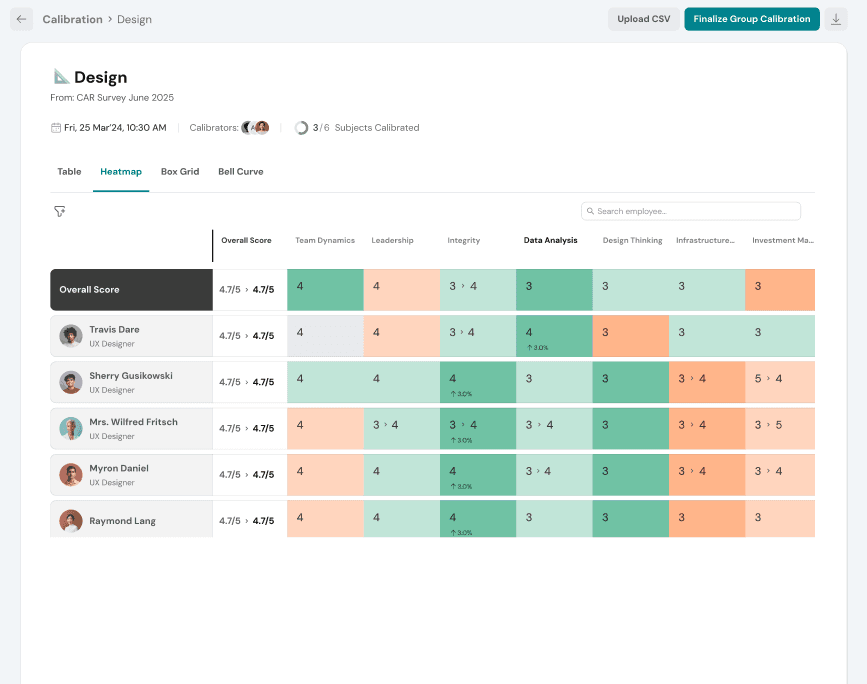
- Provide analytics and insights such as rating distributions, heatmaps, and 9-box grids to identify trends and outliers.
- Maintain a complete audit trail of rating changes, ensuring transparency and supporting fair performance, promotion, and compensation decisions.
Conducting Effective Calibration Sessions
An effective calibration process typically follows these steps:
- Define the calibration framework. Before reviews begin, establish the scope of the calibration and identify the key review questions that will carry the greatest weight in performance and talent decisions.
- Complete initial reviews. Managers independently evaluate their direct reports based on their observations, evidence, and judgment.
- Plan the calibration session. Decide whether calibration will be conducted through small peer-group discussions or a larger HR-facilitated committee, depending on your organization's size and review process.
- Conduct the calibration meeting. Managers present their ratings and supporting rationale while HR or People teams facilitate the discussion to ensure consistency, balanced participation, and alignment.
- Analyze rating patterns. Use rating distributions, heatmaps, and 9-box grids to identify rating trends, inconsistencies, and outliers across managers and teams.
- Align and finalize ratings. Where appropriate, revise ratings based on group consensus. All changes should be documented to maintain transparency and accountability.
- Communicate the outcomes. Managers share the final calibrated ratings and feedback with employees.
Calibration in ThriveSparrow
ThriveSparrow provides a dedicated calibration experience that helps organizations conduct fair, data-driven, and consistent calibration sessions.
With centralized ratings, collaborative calibration workflows, analytics, audit trails, and structured decision-making, managers and HR teams can confidently align performance ratings before they are finalized—ensuring every employee is evaluated against a consistent standard.
Learn about Setting up Calibration in Thrivesparrow